
The key point
A loose-stone specification for makers and careful buyers.
What is a cabochon?
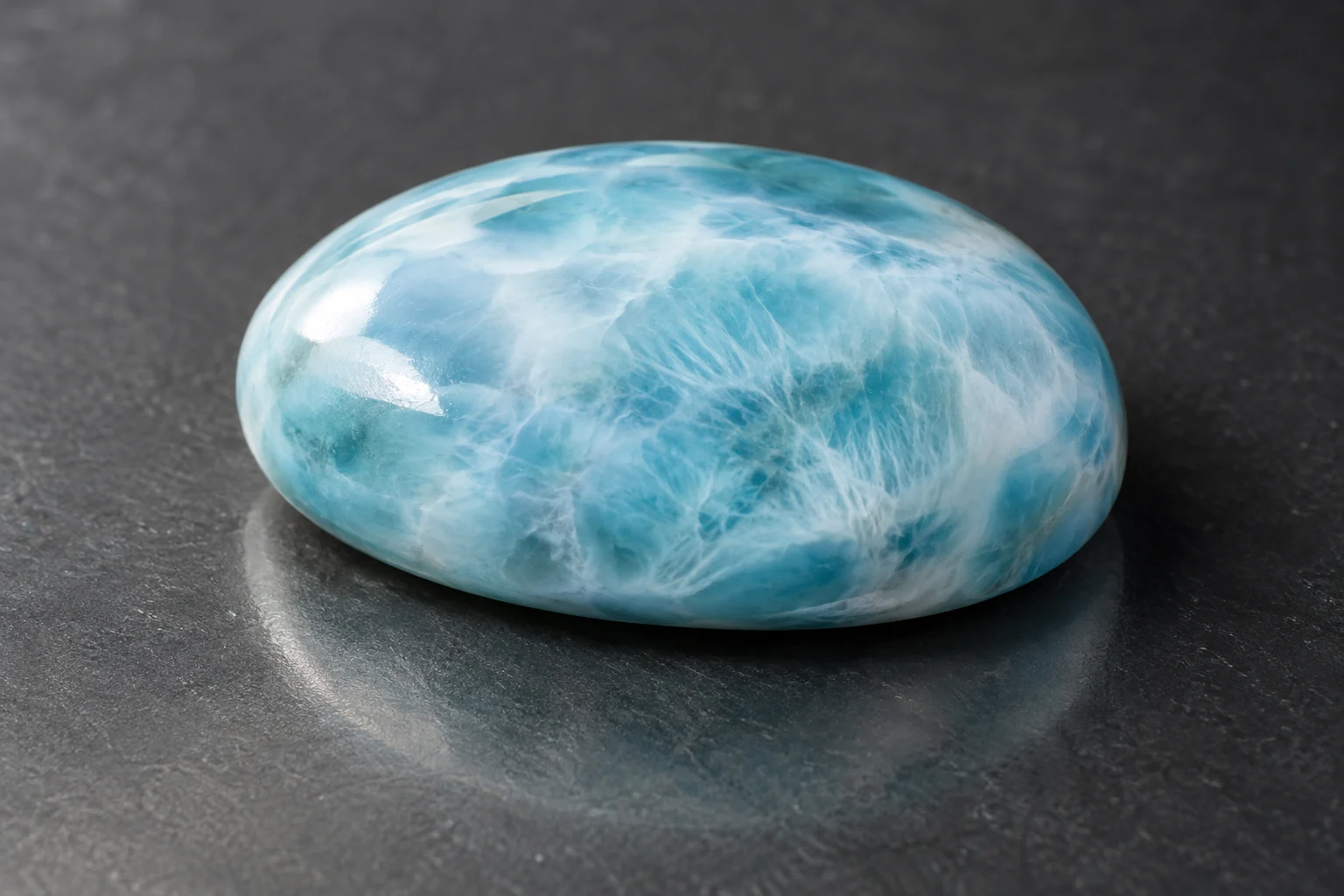
A cabochon has a rounded or domed face rather than a conventional faceted crown. Its outline can be oval, round, pear, freeform, or another shape. Outline alone does not describe fit: total depth, dome, edge, and underside matter to the setting maker.
Four common cabochon outlines
Measure three dimensions
Request length, width, and depth in millimeters, plus weight and back and side images. For a pre-made setting, ask a jeweler to confirm the fit of the actual stone. A nominal 10 × 8 mm measurement does not describe every relevant contour.
Calibrated does not mean interchangeable
Agree tolerances for repeated sizes and shapes. Ask how the widest points are measured, how the edge is finished, and whether the back is flat or shaped. Matching length and width may still leave a stone sitting too high or unevenly in a mounting.
Matching needs a visual brief
Compare earring stones together and specify the desired similarity of color, pattern, orientation, and height. Some buyers prefer variation; others want a close match. State whether overall balance, mirror-like pattern, or identical dimensions matters most.
Reserve exact stones
Confirm that approved item IDs refer to the pair in the quote and whether it is reserved. Sample images should not quietly substitute for exact-piece approval. Keep final images and measurements with the order for arrival inspection.
About this guidance
This guide provides practical purchase questions, terminology, or clearly labeled interpretation. It does not claim laboratory testing, field observation, current market research, or independent expert review.
Our initial library was developed with AI assistance. Product claims require separate item-specific evidence. Read our editorial standards.