
The key point
Choose Larimar earrings by comparing the actual finished pair, including both stones, mountings and supplied fastenings. Ask for each complete earring’s weight and clearly defined dimensions. Half a combined pair weight is an average, not a measurement of either earring. Matching appearance, comfort, material requirements and closure suitability are separate questions; a photograph or style label cannot settle them all.
Compare the finished pair, not only the stones
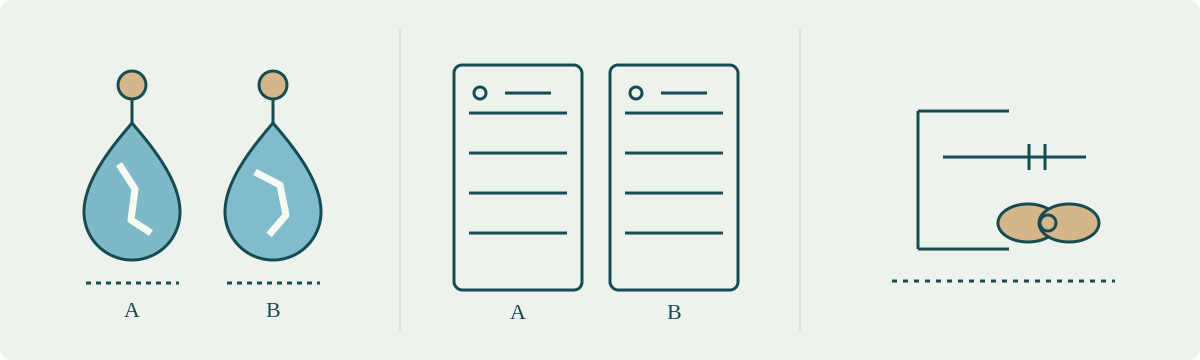
Start with the exact two earrings being offered. Request views of both together under consistent lighting, plus their backs and relevant sides. Keep a stable pair identifier and label the individual pieces A and B if helpful. A photograph showing one attractive stone does not document the second. State the orientation used in the comparison; an image’s left and right do not automatically assign a wearing side. A representative image should remain identified as representative.
Decide what a balanced pair means to you: similar blue-and-white distribution, coordinated pattern direction, outline, mounting height or an intentionally different appearance. Record the preference rather than assuming that matching requires identical natural patterns. Similar dimensions do not establish identical color, finish or individual weights. Visual similarity also does not authenticate the material or create an independent quality grade. Ask for material identification and relevant disclosures separately.
Loose matched cabochons are only part of a completed-earring specification. The surrounding metal, connection, post or hook, supplied back and any other drops contribute to the actual piece. Compare the finished pair as offered rather than transferring a loose-stone description to the whole assembly. The cabochon guide covers detailed loose-stone matching; use this guide to identify what remains to be confirmed once the stones are mounted.
Record each earring’s weight and dimensions
Request a separate weight for each complete earring and state what it includes: stone, mounting, attached drops, post or hook and supplied back where applicable. Keep grams or carats explicit and record who supplied the measurement. A loose gemstone weight, a metal-only weight and the combined weight of a pair describe different things. Do not subtract an assumed metal weight to produce a precise gemstone weight for a mounted item.
If the only supplied figure is a combined pair weight, dividing it by two gives an arithmetic average. It does not show whether the individual earrings weigh the same or establish either actual weight. Retain the pair total as such and request individual measurements when that distinction matters. Likewise, a label such as lightweight is not a measured result or a promise of comfortable wear. No single gram limit can be supplied here as a guarantee for every wearer and construction.
For dimensions, identify the endpoints and the item’s position. Is the stated length for the stone alone, the decorative body, the complete drop or the item including a hook? Ask for the relevant overall width and other dimensions, with a scale reference where useful. A close-up cannot establish physical size by itself. Keep stone dimensions separate from the completed earring, and record unknown measurements rather than estimating them from a styled photograph. Use the record below alongside the general measurement guide.
| Record field | Earring A | Earring B | Pair-level question |
|---|---|---|---|
| Visual identity | Record the exact ID, front/back/side views and known condition. | Record the second exact ID and its own views and condition. | Are both actual pieces documented in the agreed orientation and visual brief? |
| Weights and dimensions | Record individual complete weight, included parts, units and dimension endpoints. | Record its own complete weight and dimensions; keep missing values unknown. | Are these individual measurements, or only a combined total and an average? |
| Fastenings and materials | Identify the supplied post/hook/back, component materials and supporting information. | Record its own supplied components, descriptions and remaining questions. | What confirms the relevant component pairings and operating instructions? |
| Approval and terms | Keep the approved item reference and any question requiring assessment. | Retain the second approved reference and its unresolved questions. | Is the exact pair available, what is included, and which written terms were agreed? |
Check closures and component descriptions
Identify the actual fastening supplied with each piece. A hook, a lever-back assembly and a post with a separate back are different constructions. Ask which components belong together and request the maker’s operating instructions for those particular parts. A back that works on one post is not automatically compatible with another. A name such as screw back or locking back does not establish a universally most secure choice or a guarantee against loss. Construction, compatibility and condition still require appropriate consideration.
Have an appropriate independent professional assess an unresolved closure or alteration question. Do not use force, bend a hook, tighten clutch springs, cut a post or modify finished jewelry to make a generic description work. Published professional bench instructions describe workshop tasks; they are not home-adjustment directions for an unfamiliar pair. Keep any assessment linked to the actual pieces and its stated scope. Larimar Origin does not offer fitting, repair or alteration services through this article.
Request separate material and coating descriptions for the decorative body, post or hook and supplied back. A mark on one component does not describe them all. Keep the supplier’s wording and the scope of any evidence, including changes to replacement parts. The sensitive-skin guide addresses material information and personal tolerance in detail; neither 925 nor a fastening style guarantees individual tolerance. For cleaning, handling and inspection, follow guidance suitable for the complete construction rather than the gemstone alone.
Confirm the exact pair before ordering
Before approving an offer, keep the pair record, exact photographs and unresolved questions together. Confirm whether the quote is for two earrings or a single item and which backs or other components are included. If the appearance of the exact pair matters, record the approved identifiers and images rather than accepting an unmarked substitute. Ask whether that pair is available and whether a reservation has actually been agreed; the presence of a photograph does not establish either fact.
Confirm price, destination and written purchase and inspection arrangements for the actual transaction. Ask about any applicable restrictions concerning trying on or returning earrings before ordering; this guide establishes no universal hygiene exception or return entitlement. Keep an unanswered question visible instead of treating an inquiry as approval. If professional assessment is needed, agree independently who will undertake it, what can be assessed and which limitations remain.
Larimar Origin accepts inquiries about earrings and item-specific jewelry information. Exact availability, photographs, individual measurements, supplied components, materials, prices and written terms require confirmation. An inquiry is not a confirmed order or payment. We do not offer piercing, fitting, repairs, adjustments or custom matching through this guide, and we do not certify a pair’s comfort, security or skin suitability. Use the online-order guide to retain the agreed specification and transaction details in writing.
A hypothetical listing with one photograph and a pair total
A buyer sees a front photograph of one Larimar earring and a weight stated for the pair. The second actual stone, separate completed-earring weights and supplied backs are not documented. The buyer records these unknowns rather than copying the visible pattern to the unseen piece or dividing the total into two claimed measurements. Request exact-pair views and the relevant component information before approving the offer. This is an invented buying situation, not an available product, measured specimen, comfort test or completed sale.
confirming written purchase and inspection terms →
Ask about Larimar earrings and exact-pair details.Questions answered
Can I divide a pair’s total weight by two to find each earring’s weight?
You can calculate an average, but that is not a measured weight for each actual earring. Confirm what the pair total includes and request individual complete-earring weights when needed. Do not assume equal stones, mountings or supplied findings merely because the earrings are sold as a pair.
Is one type of earring back always the most secure?
No universal ranking is established here. The actual back and post must be appropriate for one another, with relevant construction, condition and operating instructions considered. Obtain suitable item-specific confirmation and arrange any necessary professional assessment independently. Do not force, bend or modify components using a generic guide.
Sources & scope
Editorial review: 5 November 2026. Research context includes Stuller’s Earring Back Education and GIA’s Bench Tip 4 on earring backs. These explain component systems and professional adjustment considerations; they do not certify Larimar Origin inventory. The pair record and case are original explanatory tools. No specimen measurements, retention or comfort tests, alterations or independent professional review were performed for this article. This guide is not a fitting assessment, medical opinion, security guarantee or service offer.
Editorial standards →