
The key point
Choosing a stone for display, handling, or a future jewelry project.
Choose use before shape
Display pieces, small stones carried in a pouch, and jewelry gems have different needs. Ask whether the shape was designed to sit securely, be handled comfortably, or fit a mounting. A polished surface does not make every piece suitable for drilling or setting.
Look at every surface
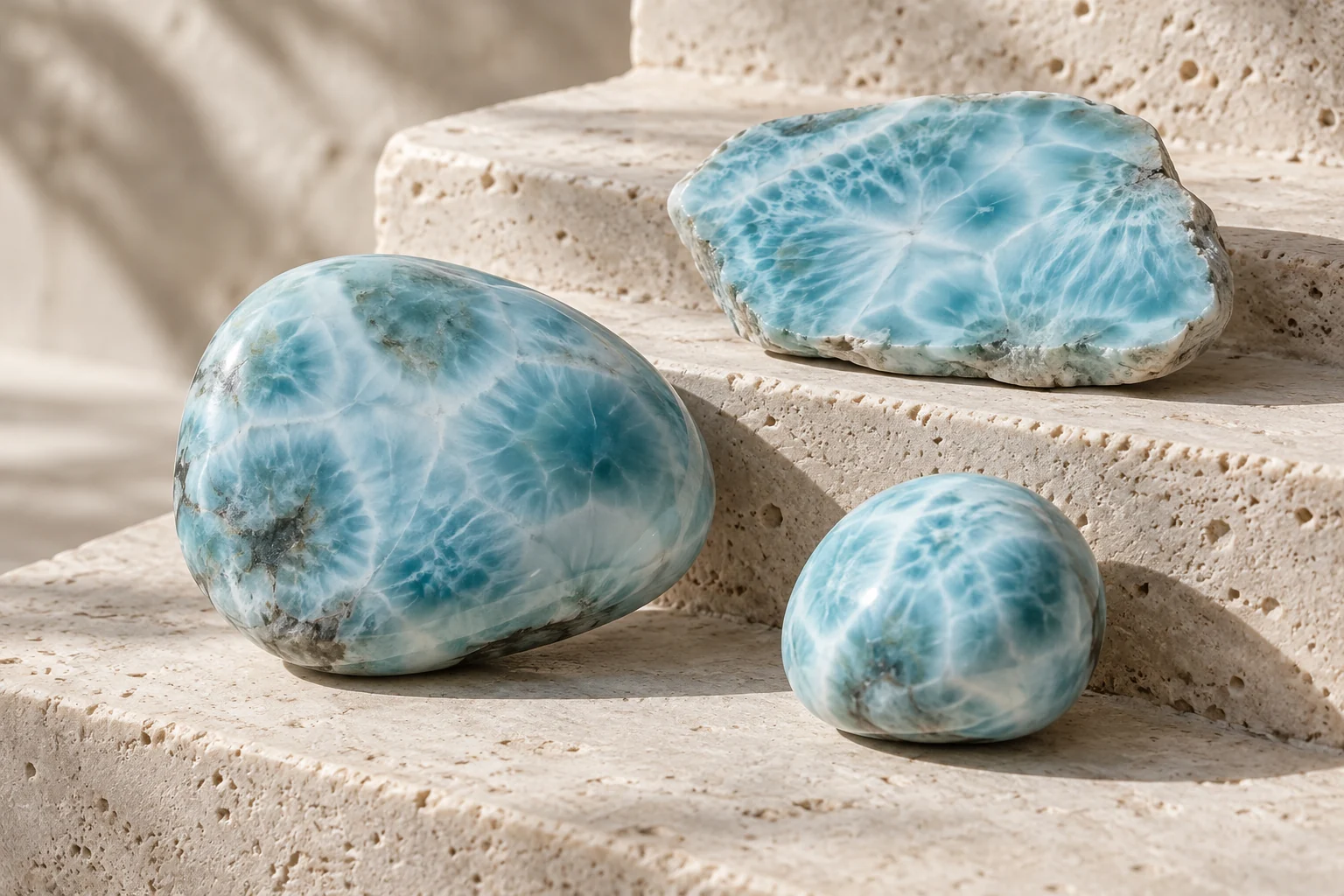
Request front, back, edge, and base photographs. Check whether one side is less polished, whether a natural area was retained, and whether dimensions describe maximum points. For a display stone, confirm how it rests and whether a stand is included.
Ask about modifications
Ask about filling, coating, assembled construction, and other treatments. Do not infer a treatment from gloss alone. A description should distinguish natural features from changes introduced during manufacture and explain relevant effects on care or repair.
Store and document
Use separate padded spaces so stones do not strike one another. Keep labels in records rather than writing on polished surfaces. For a gift, include identification, care guidance, and purchase records so the recipient knows how the item was described.
About this guidance
This guide provides practical purchase questions, terminology, or clearly labeled interpretation. It does not claim laboratory testing, field observation, current market research, or independent expert review.
Our initial library was developed with AI assistance. Product claims require separate item-specific evidence. Read our editorial standards.