The key point
What lapidaries and collectors should ask before buying a specimen or lot.
Collecting or cutting?
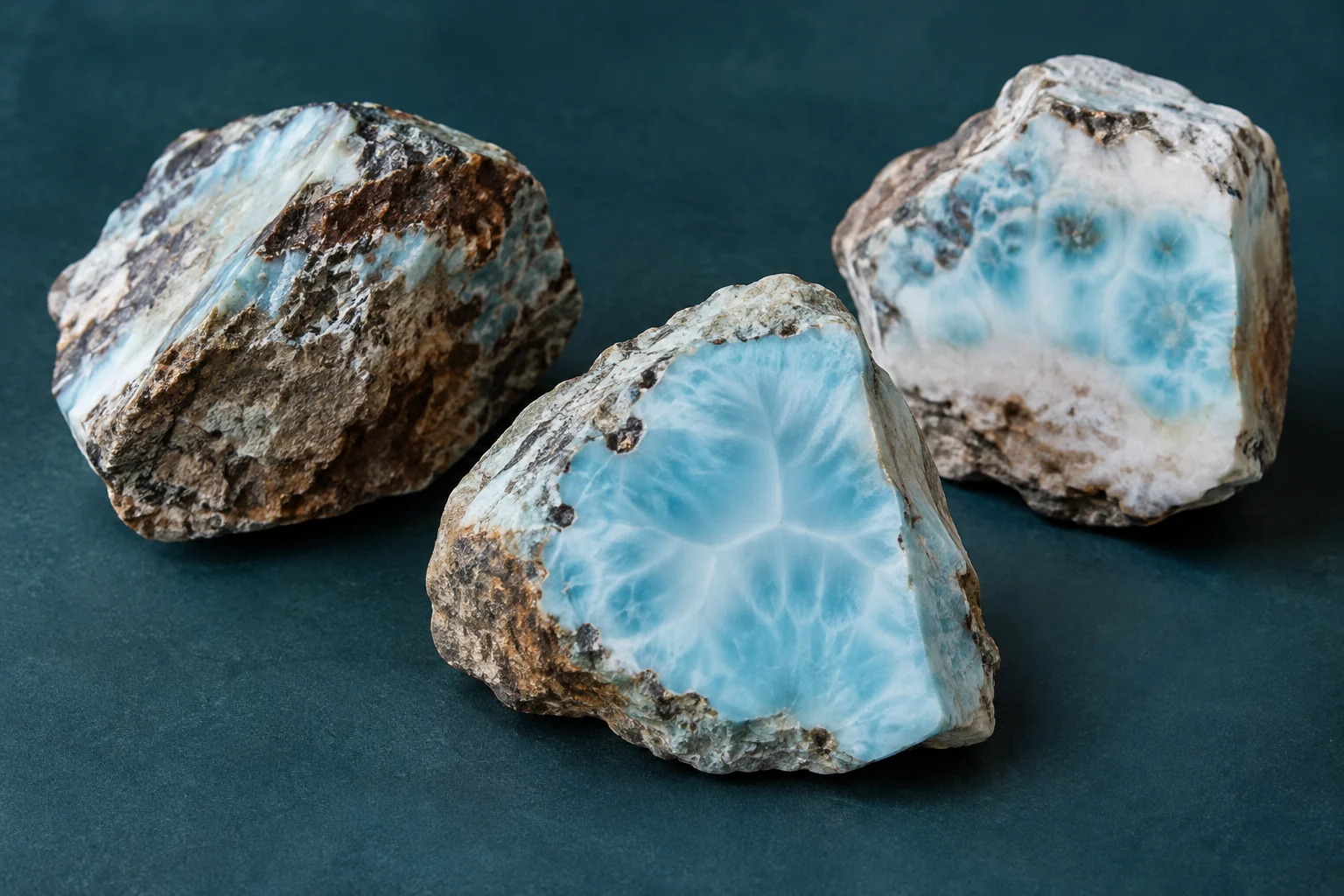
A specimen may be interesting because of natural form or host rock. Cutting rough is bought for material that may become finished stones. State your aim: an attractive display specimen is not necessarily a productive slab, and a promising slab may be less interesting as an intact mineral specimen.
Request dry and wet views
Ask for accessible sides with a size reference, plus a description of saw cuts or exposed faces. If shown wet, request dry photographs too. Wetting can change visible contrast; it does not prove the finished appearance or how far visible color extends into the piece.
Yield is an estimate
Gross weight includes areas removed during cutting. Fractures, host material, orientation, saw kerf, and intended shape affect output. Ask how usable material was estimated and whether the estimate comes from inspecting the exact piece. A general yield percentage is not a contractual promise.
Specify lot acceptance
Confirm whether photographs show the entire lot or a sample. Define acceptable size and condition, the inspection period, and the response to material differing from the description. A small evaluation purchase can be more informative than a large order based on attractive sample photographs.
Keep a cutting record
Assign an ID, photograph each stage, and record original and finished weights. This helps compare suppliers on results rather than memory and links finished stones with original documentation. Label estimates clearly so a later reader can distinguish an observed result from a prediction.
About this guidance
This guide provides practical purchase questions, terminology, or clearly labeled interpretation. It does not claim laboratory testing, field observation, current market research, or independent expert review.
Our initial library was developed with AI assistance. Product claims require separate item-specific evidence. Read our editorial standards.