
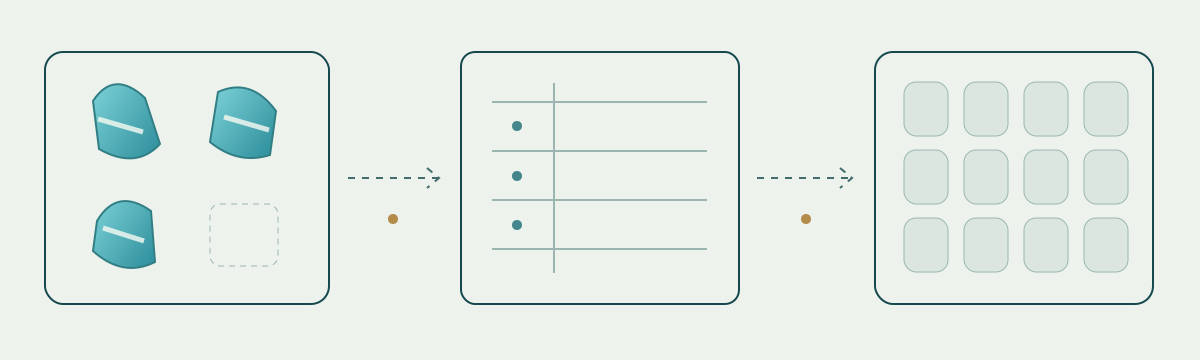
The key point
A satisfactory Larimar sample documents the inspected pieces, their stated purpose and the agreed criteria. It does not automatically establish the quality, identity or usable yield of a larger lot. Before ordering more, confirm which lot is offered, how the sample was selected, what remains unassessed and which written terms apply. A selected approval sample is not a statistical acceptance plan.
Define what the sample represents
First ask why the sample is being supplied: to show a finish, establish a design reference, evaluate a small purchase or inform a decision about an identified lot. A sample here means material for buyer evaluation. It is not automatically a laboratory specimen or a statistically designed selection. A supplier-selected showcase and a sample drawn from an offered parcel answer different questions.
Record the sample identifiers, material form, offered-lot identifier and quotation date. Ask who selected the pieces, how and when, and whether they actually came from the lot now available. Do not call an undocumented selection random or representative. Leave absent selection or source information unknown, rather than filling it in from a supplier relationship or a previous purchase.
If you are buying the exact small parcel examined, your assessment can concern those pieces. If a larger parcel is proposed, record the connection explicitly. A catalog photograph, design reference or earlier order does not document that next lot. Use the wholesale overview for the broader sourcing specification; this guide follows the narrower sample-to-order decision.
Inspect against the agreed specification
Agree usable criteria before examining the delivery: material form, count or weight basis, dimensional range, appearance preferences, condition, finish and relevant drilling or construction. Request material and treatment disclosures separately. Keep personal preference, observed condition, supplier statement and professional finding in distinct fields. This creates no universal Larimar grade or tolerance.
On receipt, reconcile sample identifiers, quantities and packaging with the quote. Record dry photographs, measurements, units and who supplied each observation. Note hidden or inaccessible areas. Assess the actual pieces against the agreed specification, using separate accepted, outside-specification and unresolved or not-assessed categories. An unanswered question is not a compliant result. The record below helps keep that distinction visible.
Do not scratch, heat, chemically test, cut, drill or modify a disputed sample to resolve identity or suitability. Arrange any necessary identification or workshop evaluation separately with an appropriate professional and an agreed scope. Appearance, or a report on one examined piece, cannot automatically confirm the identity of every unexamined item. Retain item-linked evidence and its limitations.
| Record area | Keep with the sample | Confirm for the offered lot | Leave explicit |
|---|---|---|---|
| Purpose and identity | Sample IDs, material form, intended use and specification version. | Lot ID, quote date and the documented sample-to-lot connection. | Who selected the pieces, how and when; missing selection information. |
| Inspection and evidence | Received and inspected counts, units, photographs and per-criterion observations. | Relevant material disclosures and the item scope of any professional findings. | Accepted, outside specification and unresolved or not assessed; hidden areas. |
| Approval and reference | Identified retained reference, approved images and recorded changes. | Whether the next lot and specification match the proposed approval scope. | Sample approval does not certify unexamined material or future yield. |
| Next decision and terms | Open questions and the decision actually made about the inspected pieces. | Availability, quantities, inspection, purchase and mismatch arrangements in writing. | Changed lots or specifications need a new decision; no assumed reservation or terms. |
How to measure and document a Larimar stone →
How to identify real Larimar: evidence, imitations, and tests →
Separate sample results from conclusions about the lot
An observed fraction of accepted pieces describes the sample actually inspected under the recorded criteria. It is not automatically the larger lot’s acceptance rate, usable yield, identity or commercial outcome. If you use counts, retain the denominator and the unassessed pieces. Do not silently remove unknowns to create a more reassuring percentage.
A selected approval sample differs from formal statistical acceptance sampling. The NIST handbook describes selection schemes and decision rules for deciding what to do with a defined lot, with explicit risks. This buying record supplies no universal sample size, AQL plan, confidence percentage, allowable-defect threshold or statistical certification. Random selection alone is not a guarantee of representation or quality.
Keep the actual evaluation’s scope visible. Visual inspection cannot reveal every internal feature. A cutting trial on particular rough records that outcome, not a universal yield for other pieces or future lots. Use the rough-buying guide for detailed yield planning. Formal lot-acceptance requirements need an appropriately designed plan; a short buying checklist cannot substitute for one.
Agree the next order and keep a reference
Keep an identified physical reference where agreed, alongside approved photographs, measurements and the specification version. Record later changes to the reference. Approval of its appearance is not approval of every characteristic of another item, and a reference sample is not a certified standard.
Before the next order, reconfirm the actual lot identifier, quantities, permitted variation, disclosures, inspection arrangements and response to mismatches in writing. If the lot, production, material form or specification changes, do not silently transfer earlier approval. Confirm sample cost, delivery, reservation and any return or credit arrangement for the actual transaction. These are questions to agree, not fixed terms or universal legal rights.
Larimar Origin accepts wholesale inquiries. Sample options, availability, quantity, cost and commercial terms require individual confirmation; no stocked sample kit or fixed minimum is established here. An inquiry is not a confirmed order or payment. This guide offers no laboratory testing, quality-inspection, certification, custom cutting, fitting or repair service. Keep the agreed next-order specification and unresolved questions with the quote.
A hypothetical sample followed by a different lot
A retailer approves the appearance of a supplier-selected polished Larimar sample. The next quote names a different lot without explaining its connection to that sample. Keep the observed appearance and measurements with the sample identifiers, then request the new lot’s evidence, selection relationship and assessment terms. Do not approve the supplier’s whole stock or forecast an acceptance rate. This is an invented buying situation, not an inspected sample, supplier audit, statistical finding or completed order.
Ordering Larimar internationally: a buyer’s checklist →
Ask about Larimar sample options and wholesale specifications.Questions answered
Does a satisfactory Larimar sample guarantee the larger lot’s quality?
No. A satisfactory sample supplies information about the inspected material and its stated purpose. Confirm its connection to the actual next lot, specifications and relevant evidence. It does not guarantee unexamined pieces or later orders.
Can I apply the sample’s acceptance rate to the whole lot?
Not by simple extrapolation. An observed sample fraction differs from a conclusion about a lot under an appropriately designed sampling plan. Selection, lot definition, criteria and unassessed pieces matter. This guide provides no statistical assurance.
Sources & scope
Editorial review: 6 November 2026. Research context includes the NIST Engineering Statistics Handbook sections on acceptance sampling and types of lot acceptance plans. These explain statistical boundaries; they are not a Larimar inspection standard or certification of this buyer record. The record and case are original explanatory tools. No samples were inspected, measured, cut or laboratory-tested for this article, and no supplier audit, statistical plan or independent expert review was performed. No inspection or testing service is offered.
Editorial standards →