
The key point
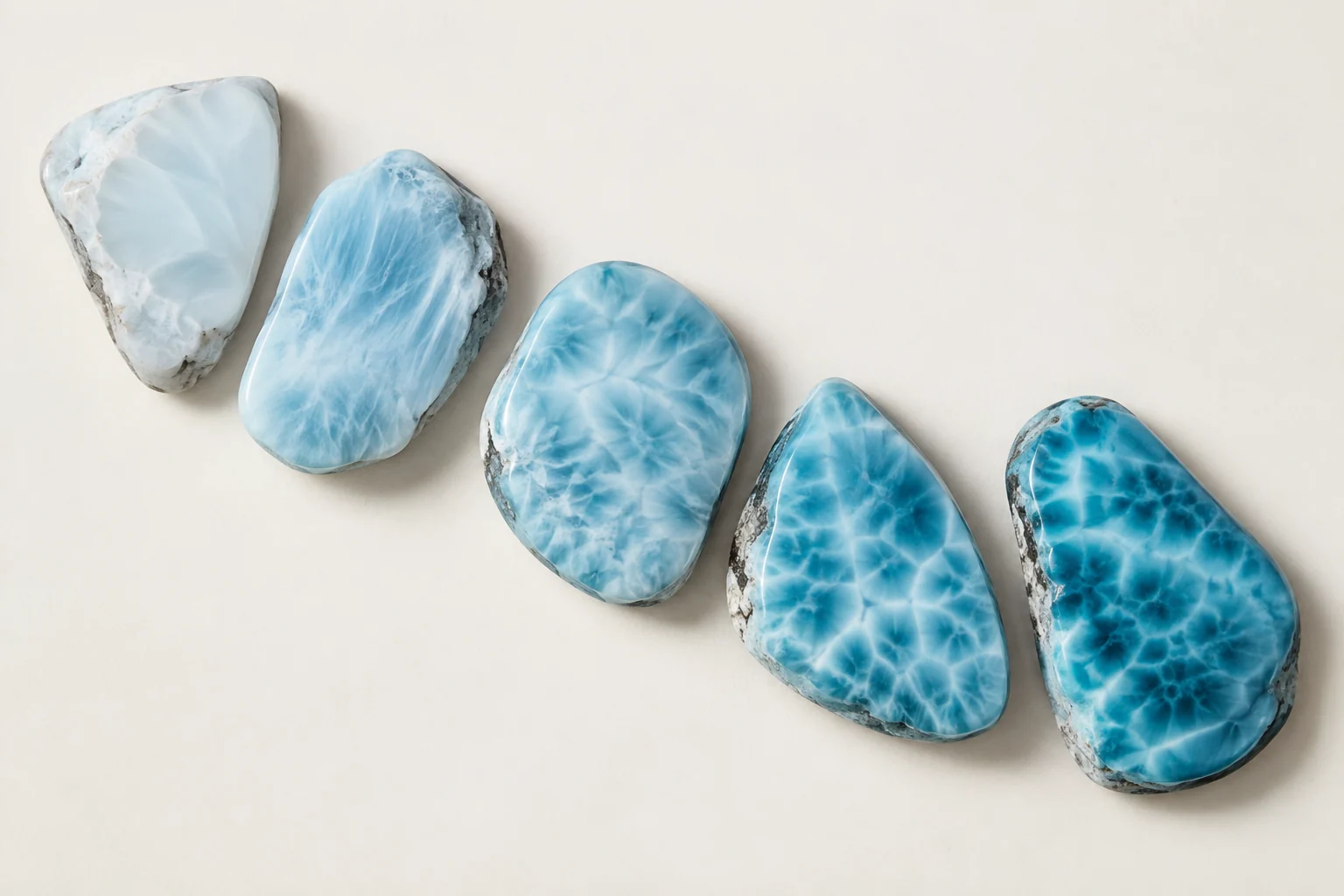
Evaluate blue, white, matrix, and surface pattern without treating sales labels as laboratory grades.
Separate color from lighting
Begin with the same lighting and background for each stone. Ask for neutral daylight photographs, a short video, and views without heavy contrast or saturation edits. Wet rough can look different from dry rough, and reflections from nearby objects can influence a polished surface. A consistent comparison is more useful than the most dramatic photograph.
Describe what you see
Useful descriptions include the balance of blue and white, distribution of pattern, visible darker areas, and whether a feature reaches an edge. Labels such as ocean, volcanic, or premium may communicate style, but ask what they mean for the exact piece. Personal preference need not match another buyer’s preference.
Face, back, and edge
A cabochon’s face may show a concentrated pattern that is not repeated on the back. Ask to see the underside and edges, especially when the setting exposes them. For pairs, compare both stones together. Similar dimensions do not guarantee a visually balanced match.
Pattern is not proof of identity
A convincing blue and white appearance is not an authentication result. Evaluate mineral identity, condition, and disclosure separately from aesthetics. A photograph of an unusual feature is not enough to name an inclusion. If identifying an inclusion matters, seek an appropriate examination.
Make a preference brief
Choose two or three example patterns, state whether uniform color or contrast matters more, and specify imperfections unacceptable for your use. This turns “best quality” into a sourcing brief a supplier can answer. Include the intended setting so a visually attractive but unsuitable shape is not selected.
About this guidance
This guide provides practical purchase questions, terminology, or clearly labeled interpretation. It does not claim laboratory testing, field observation, current market research, or independent expert review.
Our initial library was developed with AI assistance. Product claims require separate item-specific evidence. Read our editorial standards.