
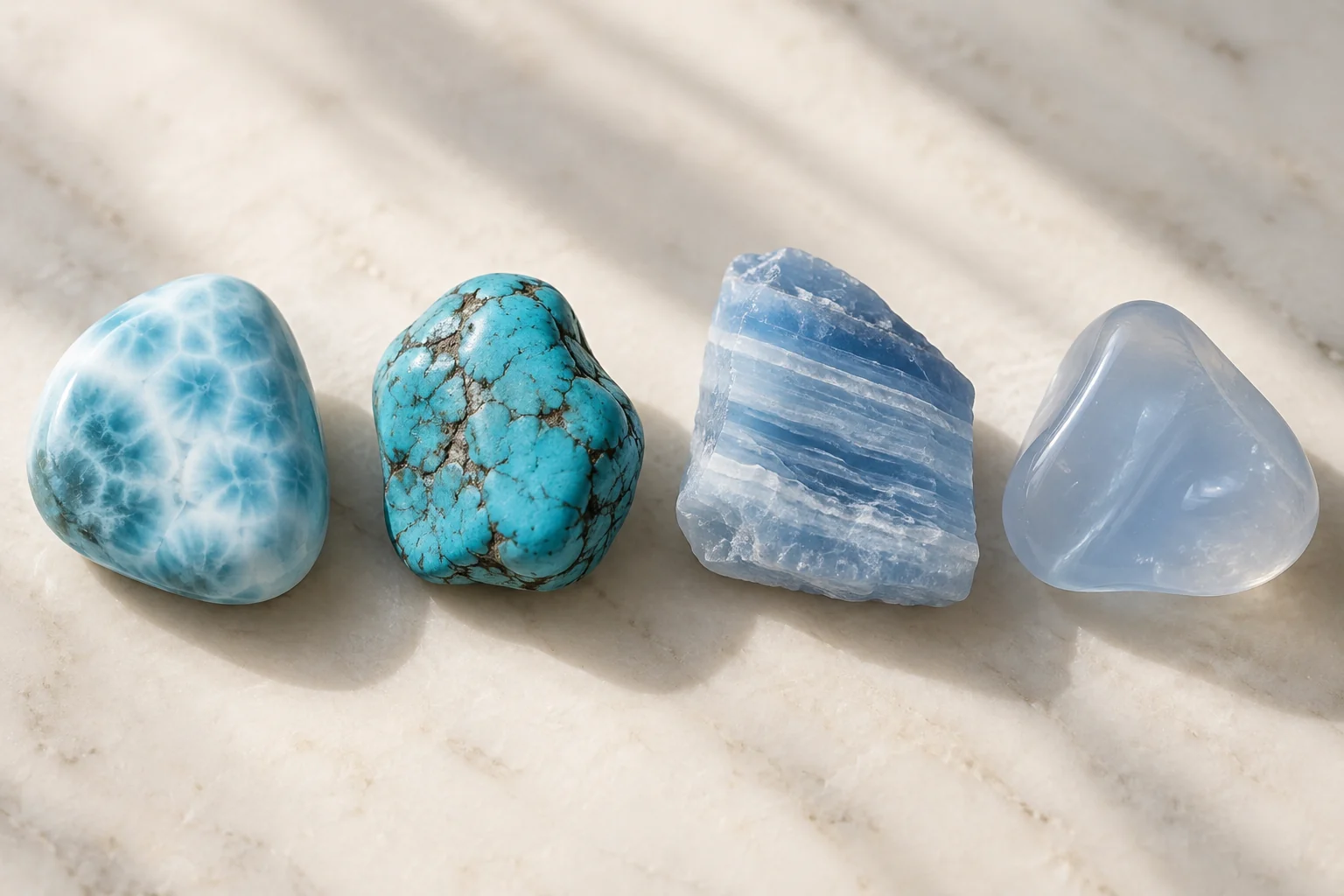
The key point
Larimar, turquoise, aquamarine, amazonite and blue calcite are different materials, even when their colors overlap. Compare mineral identity first, then appearance, durability and disclosure. No color pattern or photograph alone establishes that a stone is Larimar.
Color is not identity
Unrelated gem materials can look blue. A photograph cannot establish which mineral or manufactured material is present. Treat written identification as a claim to verify. Ask whether it means a natural mineral, treated material, assembled product, or imitation.
Compare for the project
Ask about dimensions, observed translucency or opacity, finish, care, and setting needs. Visually similar stones may require different handling. For a mineral collection, identification and documentation may matter more than achieving a blue palette.
Names and descriptions
Larimar is associated with pectolite. Turquoise and aquamarine are separate gemstone names, not grades of Larimar. “Larimar-like” and “Caribbean blue” communicate resemblance unless accompanied by clear identification. Poetic color names are not laboratory conclusions.
Use appropriate testing
Ask a gemologist which non-destructive tests suit the item. Avoid using scratch resistance, temperature to the touch, a flashlight, or water as one deciding test. Identification combines appropriate observations and measurements, with limitations for mounted or unusual specimens.
Five blue stones, five different identities
Turquoise is a phosphate mineral; aquamarine is a blue to greenish blue variety of beryl; amazonite is a variety of microcline feldspar; blue calcite is calcite described by its color. None is a grade of Larimar. The hardness values below are reference ranges for the identified materials, not a recommended scratch-test sequence. They compare one aspect of wear and do not rank beauty, toughness or price.
Reference context: Handbook of Mineralogy: PectoliteGIA: AquamarineHandbook of Mineralogy: TurquoiseHandbook of Mineralogy: MicroclineHandbook of Mineralogy: CalciteGIA: Sunstone Description — feldspar classification
| Material | Mineral identity | Mohs reference | Decision point |
|---|---|---|---|
| Larimar | Dominican blue pectolite | 4.5–5 | Evaluate pattern and protective mounting |
| Turquoise | Hydrated copper-aluminum phosphate | 5–6 | Check treatment and construction disclosures |
| Aquamarine | Beryl variety | 7.5–8 | Compare transparency, cut and condition |
| Amazonite | Microcline feldspar variety | 6–6.5 | A different mineral, not another Larimar source |
| Blue calcite | Calcite | 3 | Lower scratch resistance; assess intended use |
Larimar or aquamarine for a jewelry project?
Transparent faceted aquamarine and patterned Larimar cabochons create different visual effects. Aquamarine has higher reference scratch resistance, but that does not make every setting or fractured stone suitable for daily wear. Compare the exact pieces in the intended design: dimensions, profile, condition, mounting and care. A stone chosen for transparent sparkle will not give the same result as one chosen for opaque blue-and-white pattern.
Reference context: GIA: Aquamarine
Look-alike does not automatically mean fake
A different mineral sold under its correct name is an alternative, not fraudulent Larimar. GIA has documented a ceramic imitation and dyed crackled chalcedony resembling Larimar. The chalcedony beads in the 2020 report were sold as sea-blue chalcedony, not as Larimar. This distinction matters: evidence that a material can resemble Larimar is not evidence that a particular seller misrepresented it. Check the written identity, treatment disclosure and testing before making an accusation or purchase.
Reference context: Kiefert & Groenenboom, Imitation Larimar (GIA, 2013)GIA: Quench-Crackled Dyed Blue Chalcedony Resembling Larimar (2020)
Questions answered
Is Larimar the same as turquoise?
No. Larimar is Dominican blue pectolite, a silicate. Turquoise is a phosphate mineral. Similar color does not make them the same mineral or give them identical care requirements.
Which is better: Larimar or aquamarine?
Neither is universally better. Aquamarine has higher reference hardness; Larimar offers a different patterned appearance. Choose for the specific design, actual stone condition, mounting and budget rather than a single ranking.
Sources & scope
Mineral-species reference; properties of a particular gem or mixed specimen can require separate assessment.
Gem-species identity, appearance and reference hardness; not an assessment of an individual stone.
Mineral identity and reference hardness for turquoise.
Mineral-species reference properties for microcline.
Calcite mineral-species reference; color does not establish identity.
Used for feldspar classification: amazonite as a microcline variety, not for Larimar properties.
A documented ceramic imitation and the role of gemological testing.
A laboratory investigation of five beads sold as chalcedony, not evidence of fraud by a Larimar seller.
Our initial library was developed with AI assistance. Product claims require separate item-specific evidence. Read our editorial standards.