
The key point
Balance beauty with construction, comfort, metal disclosures, and practical wear.
Start with use
An occasional necklace and a daily ring face different knocks, surfaces, and products. Consider maintenance as well as appearance. For gifts, ask about preferences and practical needs instead of selecting only the largest or bluest stone.
Check construction
Request metal description, dimensions, total weight, closure details, and photographs of the back and stone retention. Confirm whether a pendant includes its chain and whether the bail fits a chain already owned. For earrings, ask for each earring’s weight rather than only a combined figure.
Three setting approaches
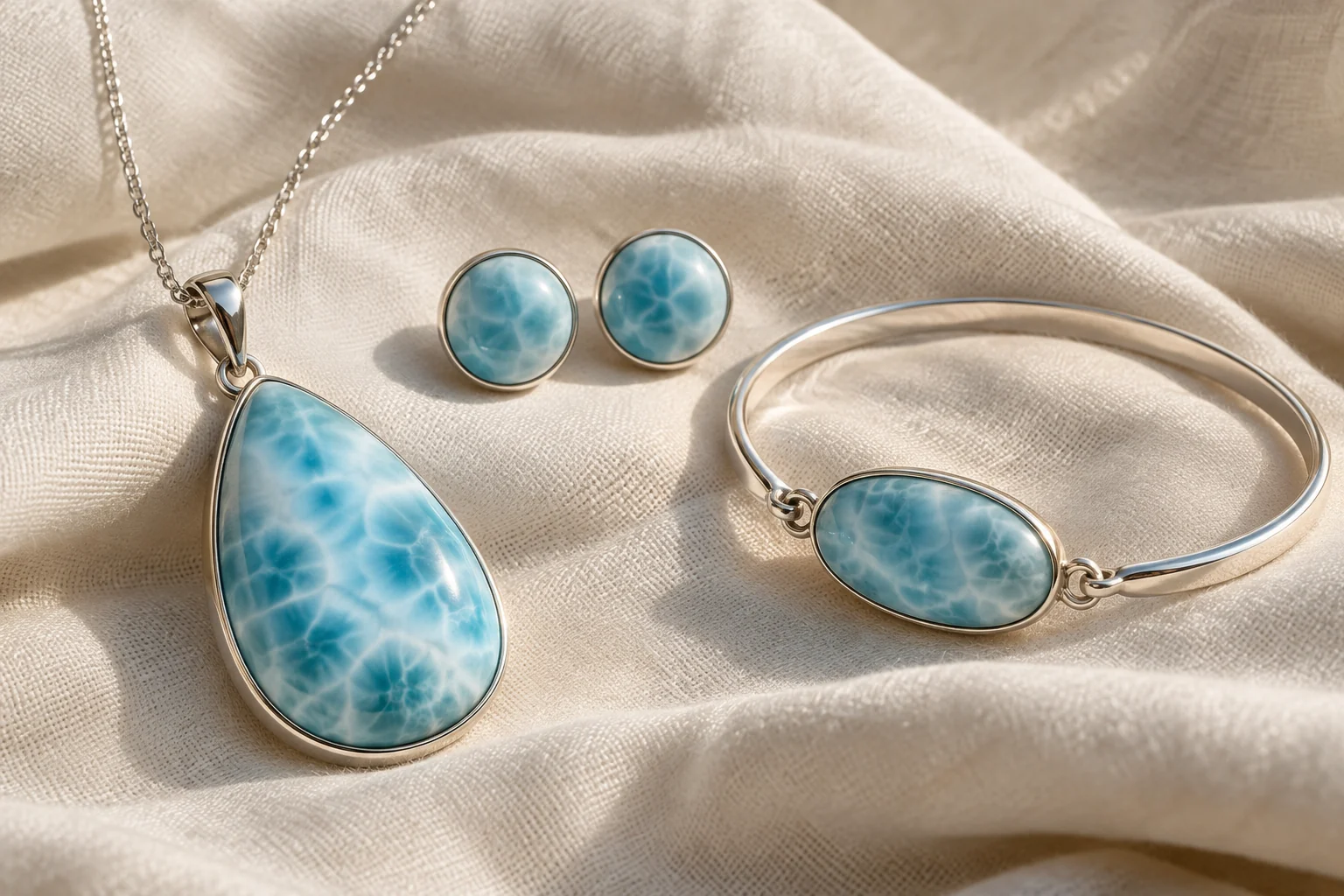
A metal rim surrounds the stone.
Individual claws hold the stone.
Raised metal can help shield exposed edges.
Be specific about metal
A silver-colored setting is not a metal assay. Ask whether the piece is solid metal, plated, or otherwise constructed, and what a marking means. If sensitivity matters, request composition information from the manufacturer rather than relying on a general “hypoallergenic” claim.
Review service and returns
Ask who can inspect and repair the setting, and what applies if a stone is damaged or lost. Check fit and closures during the inspection period. A setting that catches clothing or cannot be serviced may be unsuitable for a regular wearer.
About this guidance
This guide provides practical purchase questions, terminology, or clearly labeled interpretation. It does not claim laboratory testing, field observation, current market research, or independent expert review.
Our initial library was developed with AI assistance. Product claims require separate item-specific evidence. Read our editorial standards.